Generator Sizing Guide for Office Trailers — kW by Trailer Size
An undersized generator causes tripped breakers and equipment damage. An oversized generator wastes fuel. This guide helps you choose the right generator for your trailer and conditions.
The Generator Sizing Formula
Generator sizing follows a straightforward formula. Calculate the total connected load, then apply a safety factor to account for startup surges and simultaneous load conditions.
Formula
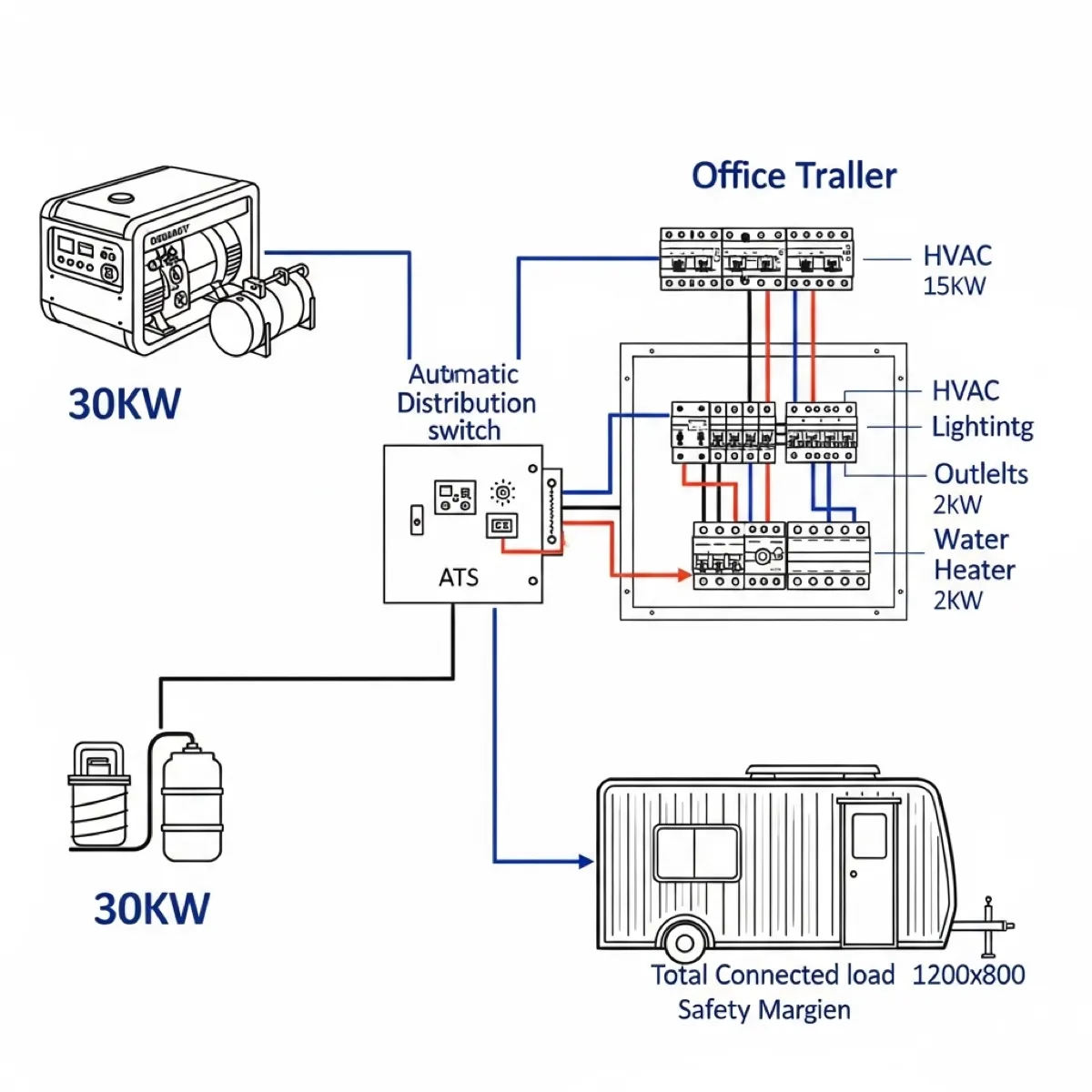
Generator kW = (Trailer Load + HVAC Load + Equipment Load) x 1.25
The 1.25 multiplier is a safety factor. It prevents the generator from running at full capacity continuously (which shortens generator life) and provides headroom for motor startup surges, particularly from HVAC compressors and pumps.
Understanding Load Components
Your total power requirement is made up of three components. Each must be estimated separately.
Trailer Base Load
Lighting, outlets, water heater, and basic electrical systems built into the trailer. This is the minimum power draw when the trailer is occupied but HVAC is off. Typically 3-8 kW depending on trailer size.
HVAC Load
Heating and cooling is usually the largest single load. HVAC systems draw 5-15 kW depending on trailer size and climate. Startup surge can be 2-3x the running load for a few seconds.
Equipment Load
Computers, printers, copiers, microwave, refrigerator, coffee maker, and any other equipment plugged in. Add up the wattage ratings on each device. Typically 2-5 kW total.
Recommended Generator Size by Trailer
The table below shows the recommended generator size for each standard office trailer size. These recommendations include the 1.25 safety factor and assume standard HVAC and office equipment loads.
| Trailer Size | HVAC (BTU) | Estimated Total Load (kW) | Recommended Generator |
|---|---|---|---|
| 8x20 | 12,000-18,000 | 10-15 | 20 kW |
| 8x32 | 18,000-24,000 | 14-20 | 20-25 kW |
| 8x40 | 24,000-30,000 | 18-24 | 25-30 kW |
| 10x50 | 30,000-40,000 | 22-32 | 30-40 kW |
| 10x56 | 36,000-48,000 | 28-40 | 40-50 kW |
| 12x60 | 48,000-60,000 | 38-50 | 50+ kW |
| 12x64 | 50,000-64,000 | 40-55 | 50+ kW |
| 24x60 (double-wide) | 80,000-120,000 | 60-85 | 75-100 kW |
When to Use Each Generator Size
20-25 kW
Best for single small trailers (8x20 through 8x40) in moderate climates with standard office equipment. This is the most common generator size for single-trailer construction sites.
Fuel consumption: approximately 1-2 gallons per hour at typical load.
30-40 kW
Best for mid-size trailers (10x40 through 10x56) or small trailers in extreme climates where HVAC load is significantly higher. Also used when heavy office equipment (large copiers, servers) is present.
Fuel consumption: approximately 2-3 gallons per hour at typical load.
50+ kW
Required for large trailers (12x60+), double-wide units, or multi-trailer sites powered from a single generator. Also needed when powering support equipment (Water Box, exterior lighting) from the same source.
Fuel consumption: approximately 3-5 gallons per hour at typical load.
Cold Weather Adjustments
Cold weather affects generator sizing in two ways: the HVAC heating load increases, and the generator itself produces less power in extreme cold.
- 32F and below:
- Increase generator sizing by 15-20% above the standard recommendation. HVAC heat pumps work harder and electric supplemental heat may engage.
- 0F and below (arctic):
- Increase by 25-30%. Insulation upgrades reduce heat loss but do not eliminate it. Heat trace cable on water lines adds additional electrical load. Diesel generators may need block heaters to start reliably.
- High altitude (5,000+ ft):
- Diesel generators lose approximately 3.5% of rated power per 1,000 feet above sea level. A 50 kW generator at 5,000 feet effectively produces about 41 kW. Factor this into your sizing.
Fuel Storage and Compliance
Generators run on diesel with 24+ hour runtime per tank. For extended operation or remote sites, auxiliary fuel tanks extend the refueling interval.
- 250-gallon tank: single generator, short to medium projects
- 500-gallon tank: extended operation, remote sites with limited fuel delivery access
- EPA SPCC plan: required when aggregate aboveground fuel storage exceeds 1,320 gallons — includes generator tank + auxiliary tanks
- Containment berm: required when aggregate storage exceeds 1,320 gallons — sized at 110% of the largest container
Multi-Trailer Sites
Sites with multiple office trailers can use either individual generators per trailer or a single larger generator with distribution. Each approach has trade-offs:
Individual Generators
One generator per trailer. Simpler setup, easier to redeploy, and failure of one generator does not take down other trailers. Higher total fuel cost and more maintenance points.
Central Generator
One large generator powering multiple trailers via temporary power distribution. More fuel efficient, fewer maintenance points, but requires distribution panel and conduit runs. Single point of failure.
Frequently Asked Questions
Need a Generator Sized for Your Trailer?
Tell us your trailer size and site conditions. We will recommend the right generator and handle delivery, fueling, and maintenance.